 Polyreader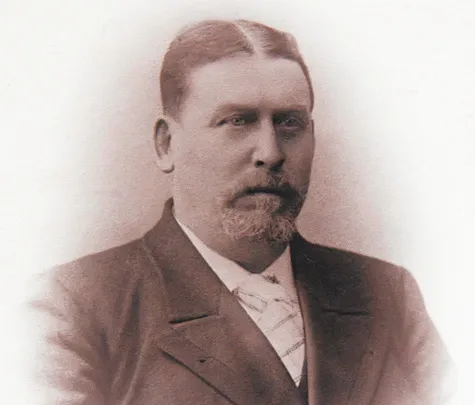
A Manchester engineer in Ozyory
My great-great-grandfather, John Matthew Frost — Иван Матвеевич (Ivan Matveyevich), to the Russians who knew him — was a Manchester engineer who moved to Russia sometime in the 1860s. He ended up in Озёры (Ozyory — “lakes”), a small town about 80 km south of Moscow, running the textile mill of the Щербаковы (Shcherbakovs) — a Russian merchant family of peasant origin who had built the local cotton industry from nothing, and who would later stand godparents to several of John’s children. He’d been brought over to introduce new technology (fire-prevention equipment) and was paid a fairly princely 5,000 roubles a year plus board. He stayed long enough to design a new red-brick factory building in the English style, with tall arched windows. The building is still there.
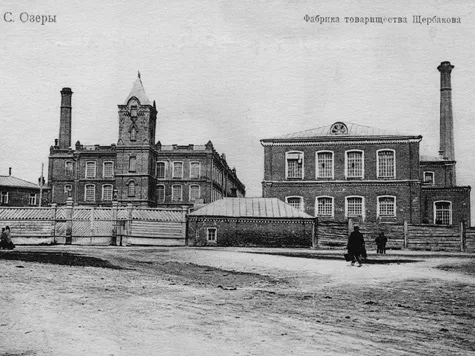
It wasn’t an unusual life choice. England had just been through the Industrial Revolution and the Russian Empire was hungry for the expertise that came with it, so a steady trickle of English engineers made the trip east.
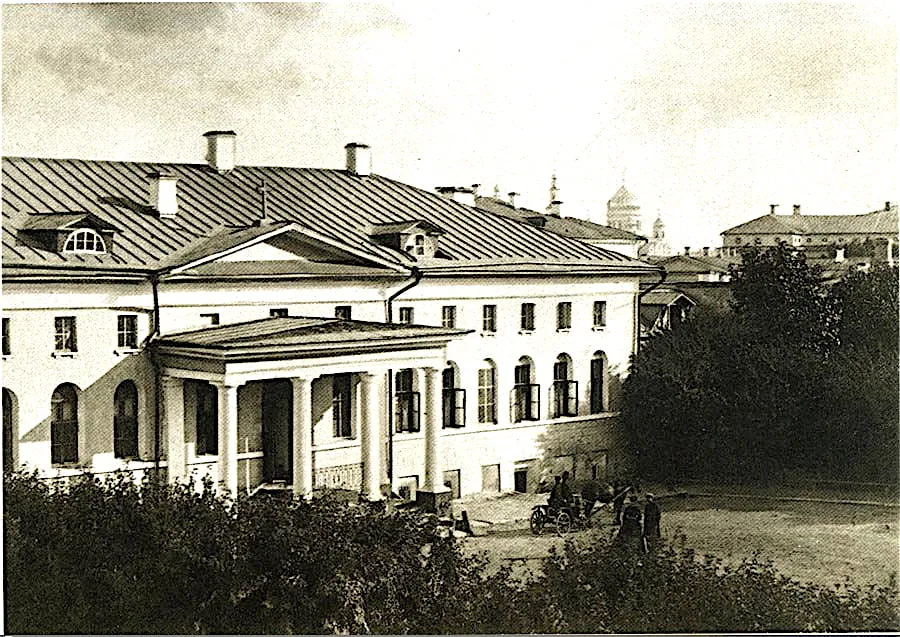
The Frosts were English people who happened to live in Russia. Not Russians. They kept their English names. His first wife — Elizabeth Anne — died in Ozyory in 1879 giving birth to twins. Her sister, Agnes Jane Walker, came out from England to help look after the children, and a year later, on 20 September 1880, the two of them were married at the British Chapel on Вознесенский переулок (Voznesensky Lane) in central Moscow. The parish register still records it: John Frost, 35, widower; Agness Jane Walker, spinster; Chaplain Walter Beck.
John and Agnes had seven daughters, all born in Ozyory. One of them — also called Agnes, after her mother — is my father’s grandmother on his mother’s side: my great-grandmother. The girls were baptised in the local Orthodox church in Ozyory, after some confused negotiation between the priest and the Protestant factory manager about how that was supposed to work. They eventually moved north to Богородск (Bogorodsk; today’s Ногинск / Noginsk), another big textile town, and returned to England in the very late 1890s, settling near Stratford-upon-Avon.
Icons in the attic, and a Cold War kid
They brought icons and artifacts back with them. As a child I’d find them in the attic at my grandparents’ house — my Irish grandmother didn’t care for icons in the living room, so they lived upstairs, and I’d climb up to look at them. My dad still remembers his grandmother Agnes — the daughter, born in Ozyory — who spoke English with a heavy Russian accent her whole life despite leaving Russia as a young girl.
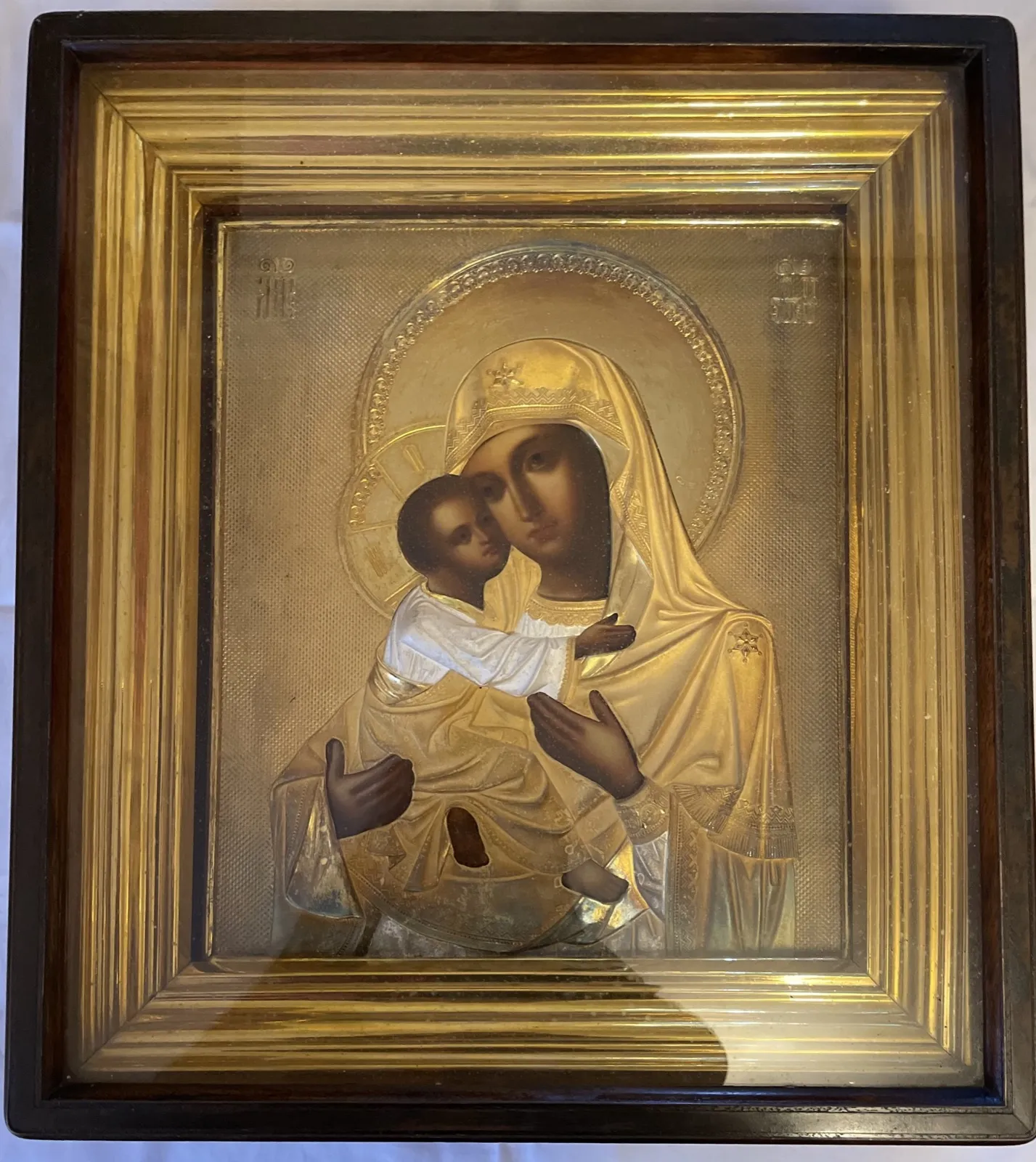
My grandfather donated the family’s largest icon — a Mother of God in a gilded riza inside its original wooden case — to St Peter’s Church in Formby in 1977, where it’s still brought out each Christmas. It’s about 150 years old and is thought to have been Elizabeth Anne’s own icon: given on her marriage in the Russian tradition, and returned to the family after she died in Ozyory in 1879.
I grew up during the Cold War, and the icons sat oddly against the news on the television: who were these people, with their strange-looking language, who’d been our allies in the war but were now apparently our enemies? I wanted to learn Russian. It wasn’t on offer at school. I’d have to wait.
The wait turned out to be about thirty years. When Duolingo finally released its Russian course in 2016, I was very ready. I devoured it in about 300 days.
The “what next?” problem
Then I hit the wall every learner hits. Apps get you to a point — but the point isn’t fluency, it’s the start of being able to engage with real content. What I really wanted was to read. Real Russian. Books, articles, anything.
It’s hard. You hit unknown word after unknown word. You stop, look one up, lose the thread of the sentence; look up the next, lose the thread of the paragraph. Reading becomes lookup with a side of reading.
I tried a lot of products — Lingvist, Babbel, Busuu, Memrise — but they rarely went much beyond the ground Duolingo had already covered. Then I found Readlang.
What I really liked about Readlang was the click-to-translate feature: frictionless, inline. I already knew a lot of words, so lookups were only occasional, which meant I could move through a text relatively quickly. That, plus the fact that you could upload your own texts.
But there were things I wasn’t keen on. I wanted to see the whole article at once, not have it chopped into tiny chunks. And the audio could have been much better — it doesn’t highlight which word is currently being spoken, only the line you’re on. Other products did this better, notably Google Chrome, whose reading mode highlights each word as it’s spoken and scrolls the text along with you. But Chrome isn’t set up for language learners, and its click-to-translate workflow is horrible: three separate clicks and the entire Google Translate app opens. What one hand gives, the other takes away.
No one product covered what I wanted. I was going to have to roll my own.
Here’s what I think matters.
Translations — and not just single words. Phrases too, because plenty of things don’t lift word-for-word; and even with single words you have to be careful, because the same word can mean very different things in different contexts.
Audio — rich audio with speech marks, so you can follow along and actually see which word is being spoken, not just which line you’re on.
Vocab — not only the raw forms you capture as you read, but their normal forms and a bit of grammar to go with them.
Flashcards obviously matter for practice, but why build your own when Quizlet already does it well? Just make everything cleanly copyable across.
Full-form articles — the article itself wants to live as a single page, all of it, all the time, so you can skim back a couple of paragraphs without leaving the reader. Splitting the page into chunks is death for that.
Pricing — translation and text-to-speech services charge per character, which means the real cost is per article, not per month. Traditional fixed-price SaaS subscriptions don’t reflect that well: you’re either overcharging light users or undercharging heavy ones. A prepayment model — buy credit, spend it as you go — is a much better fit.
AI unlocks a wealth of possible features for an app like this. The obvious uses are content generation, both text and images. But the more interesting ones are analytical: contextual translation, asking an LLM to assess the CEFR level of an article, summarising a piece that’s too long to sit down with.
And so Polyreader was born. I see it as a platform for improving your foreign language reading. It’s highly opinionated about what’s important for that, but then the best apps usually are in my opinion.
One day, Russia
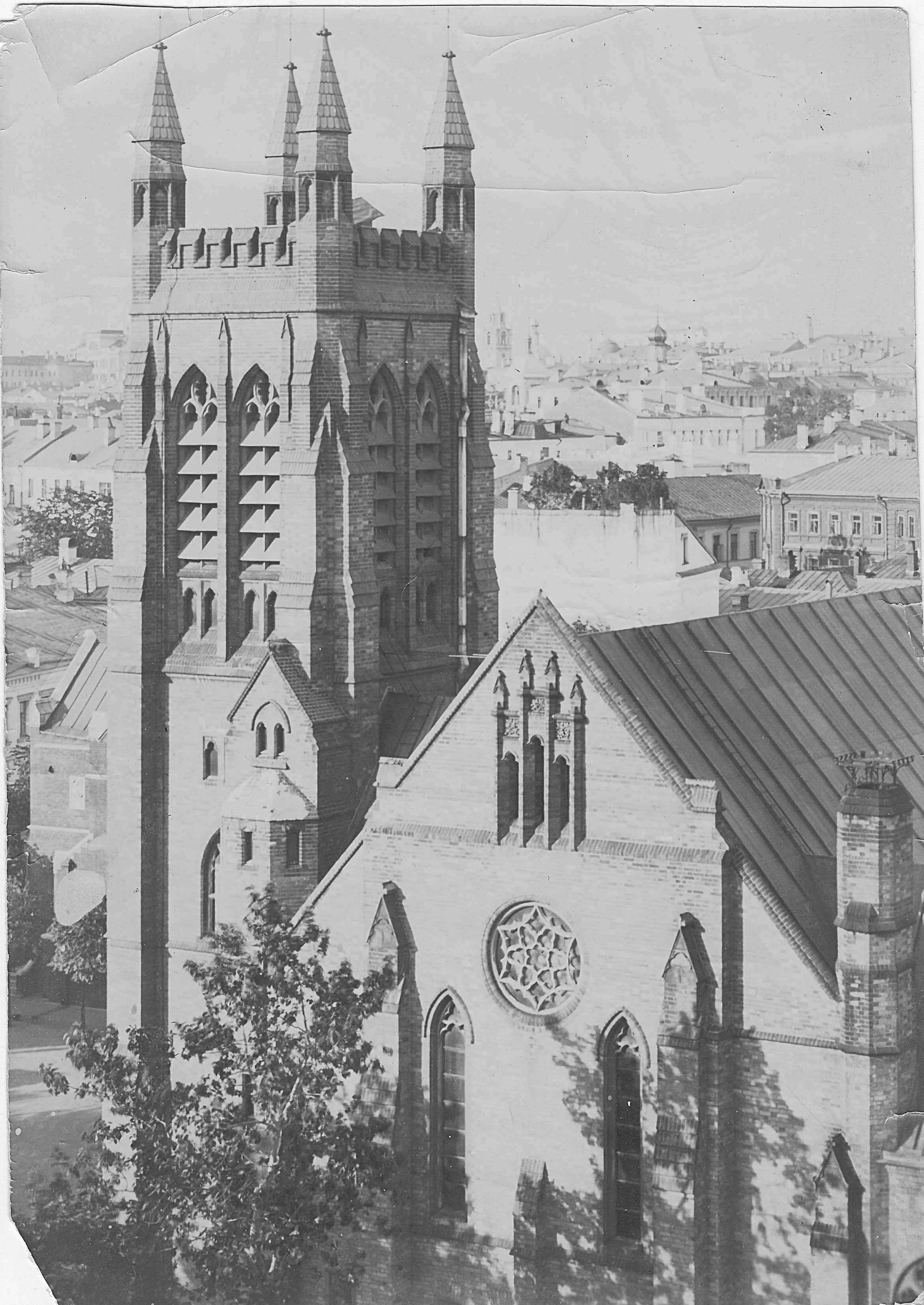
The British Chapel where John and Agnes were married is no more. It was demolished in 1884 and replaced on the same site by St Andrew’s Anglican Church, designed by the architect R. Knill Freeman in Victorian Neo-Gothic style. St Andrew’s still stands on Вознесенский переулок today — though it had a strange twentieth century. The chaplain was expelled in 1920, and for decades the building served as a hostel and diplomatic housing. Then in the late 1950s, its acoustics — judged the best in Moscow after the Conservatory — caught the attention of the state record company Мелодия (Melodiya), which moved in and used it as a recording studio. Shostakovich and Rostropovich both recorded there. Services finally resumed on 15 July 1991, and the building was formally returned after a visit by Queen Elizabeth II in 1994 — though Melodiya didn’t fully vacate until 2001.
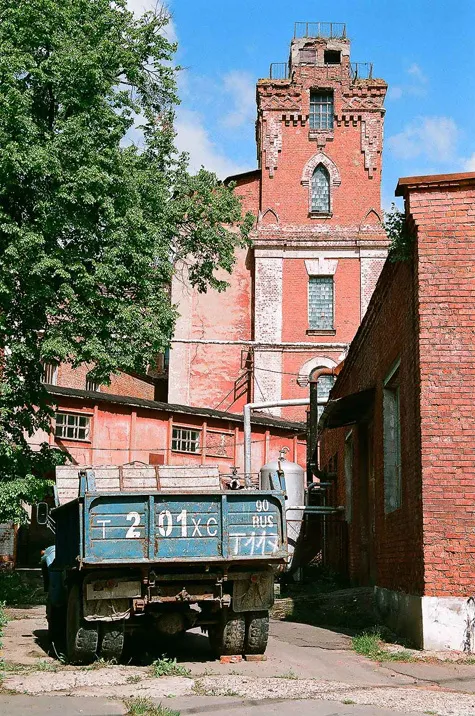
Down in Ozyory, the factory my great-great-grandfather designed is still standing. The mill itself went bankrupt in 2000 — broken by cheap imports, like a lot of post-Soviet factories — and the buildings have been re-let since as an industrial park. Frost’s red-brick block is one of them. The Trinity Church where his daughters were baptised is still standing too, and active again as a parish, though the side chapel where the baptisms actually happened was demolished under the Soviets in the 1930s.
Now that I can hold a conversation in Russian and read most of an article without hitting the wall, I’d like to go and see it all for myself. Walk the streets Frost walked. Find the house where Agnes was born. Have the conversations with the people who still live there that nobody in my family has had since 1899.
If you’re stuck in the same gap between finishing your course and actually reading something — or if you’ve got your own Ozyory to get to — I hope Polyreader helps.
Happy learning.
Sources
Family history and photographs
- The marriage record from the St Andrew’s Anglican Church parish register in Moscow, generously shared by Giles Walker (Churchwarden) and Helen Watson (Archivarius) in February 2024.
- Helen Watson’s The British in Moscow archive, including the English Church page — source of the 1860s British Chapel photograph.
- Пришли по-английски, Московский Комсомолец, September 2011 — source of the John Matthew Frost portrait and the factory photographs, and of the detail that the Shcherbakovs were godparents to some of Frost’s children.
- Правнучка Джона Фроста посетила Озёры, ozery.info, September 2011.
The Frost icon at St Peter’s, Formby
- Nick Philpott, “Our Russian Icon,” parish magazine of St Peter’s Church, Formby — for background on the icon (drawing on the NADFAS report of 1991 and the inscription on its wooden case), and the date of first display at Christmas 1979.
St Andrew’s Anglican Church, Moscow
- A History of St Andrew’s on moscowanglican.org.
- Wikipedia: St Andrew’s Anglican Church, Moscow — for the architect (R. Knill Freeman), construction dates, the Melodiya recording studio period, and the return of the building to the congregation.
- The c. 1905–1912 photograph of St Andrew’s is from Wikimedia Commons (public domain).

Ozyory today
- Wikipedia: Ozyory, Moscow Oblast — population and administrative status.
- Russian Wikipedia: Церковь Святой Троицы (Озёры) — for the Soviet closure, demolition of the bell tower and side chapels, and the 1990s restoration.
- Город Озёры on OzeryGEO — for the 2000 bankruptcy of the Oka textile mill.
- Industrial Park Ozyory listing — for the present-day site.
The Shcherbakovs
- Хозяин. Михаил Фёдорович Щербаков on Я — Краевед — biography of the factory owner who employed John Frost.